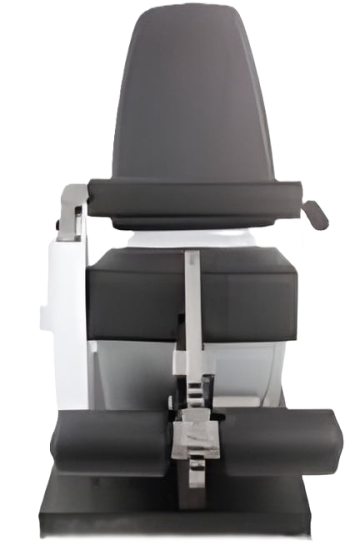
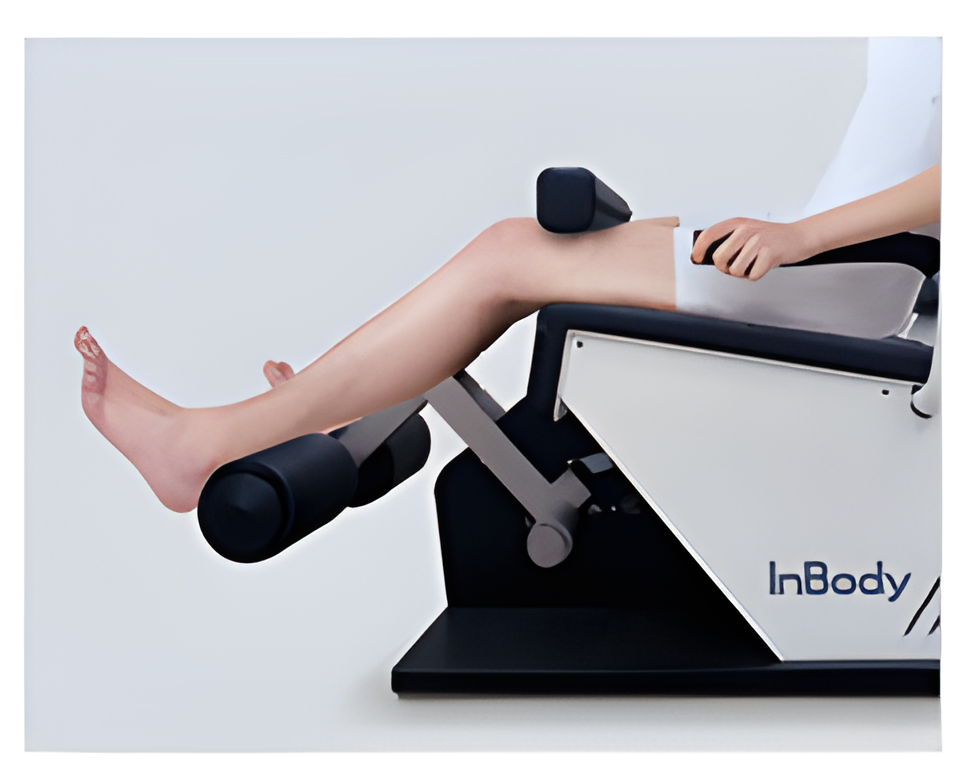
The thigh accounts for 60–70% of total body muscle mass and is made up of the quadriceps and hamstrings. The InBody Leg Strength Analyzer (IB‑LS) evaluates Absolute Muscle Strength, Muscle Endurance, and Muscle Balance and delivers strength training tailored to each individual.
Four core readings behind every test, pulled straight from the brochure’s intro panel.
Absolute Muscle Strength
The absolute strength of the quadriceps and hamstrings plays a crucial role in daily life and athletic ability.
Muscle Endurance
Muscle endurance, supporting repetitive activity, is measured to be just as important as absolute strength.
Muscular Strength Balance
The balance between the two legs matters — as does the balance between the quadriceps (extension) and hamstring (flexion).
Strength Exercise
Muscle strength and endurance can be increased through targeted strength exercise, essential to lower‑body health.
Test Mode
Two guided tests, each completed in seconds on the touchscreen.
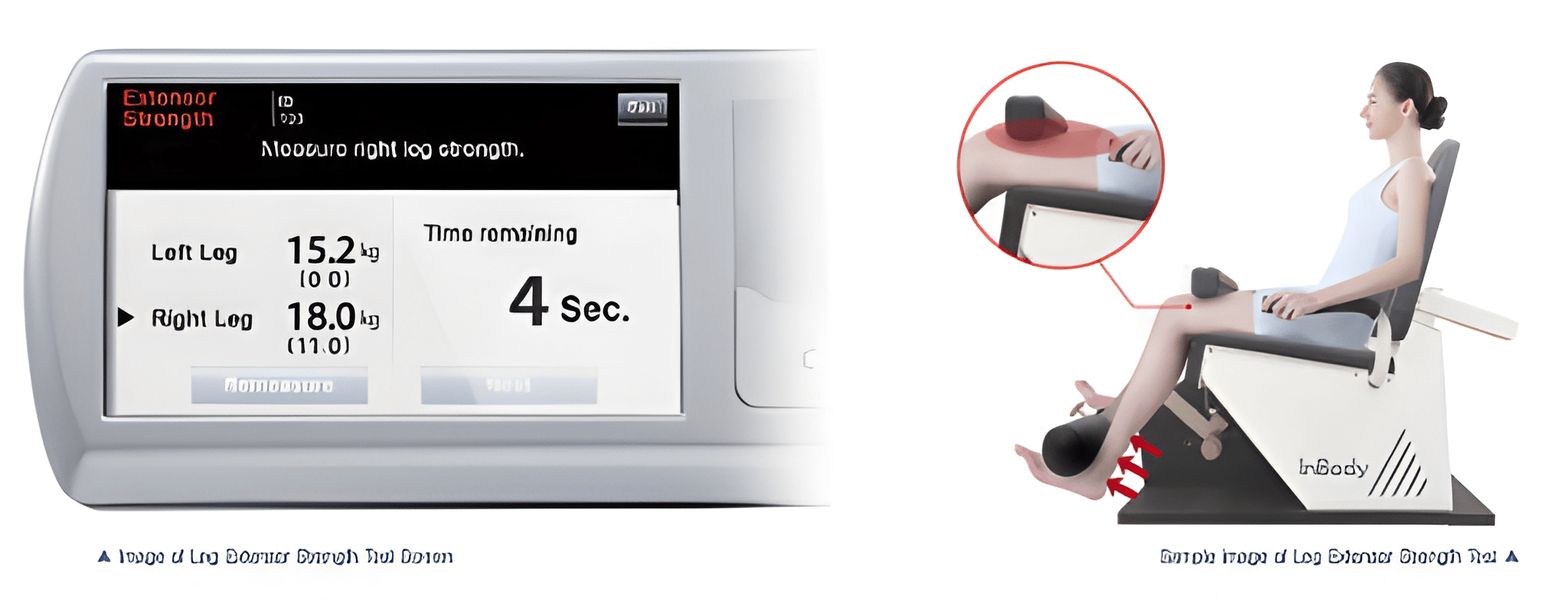
Leg Extensor Strength Test
Measures the muscle strength of the quadriceps at the front of the thigh — the muscle group used to extend (straighten) the knee.
Test angle fixed at 60°, measured left and right individually.
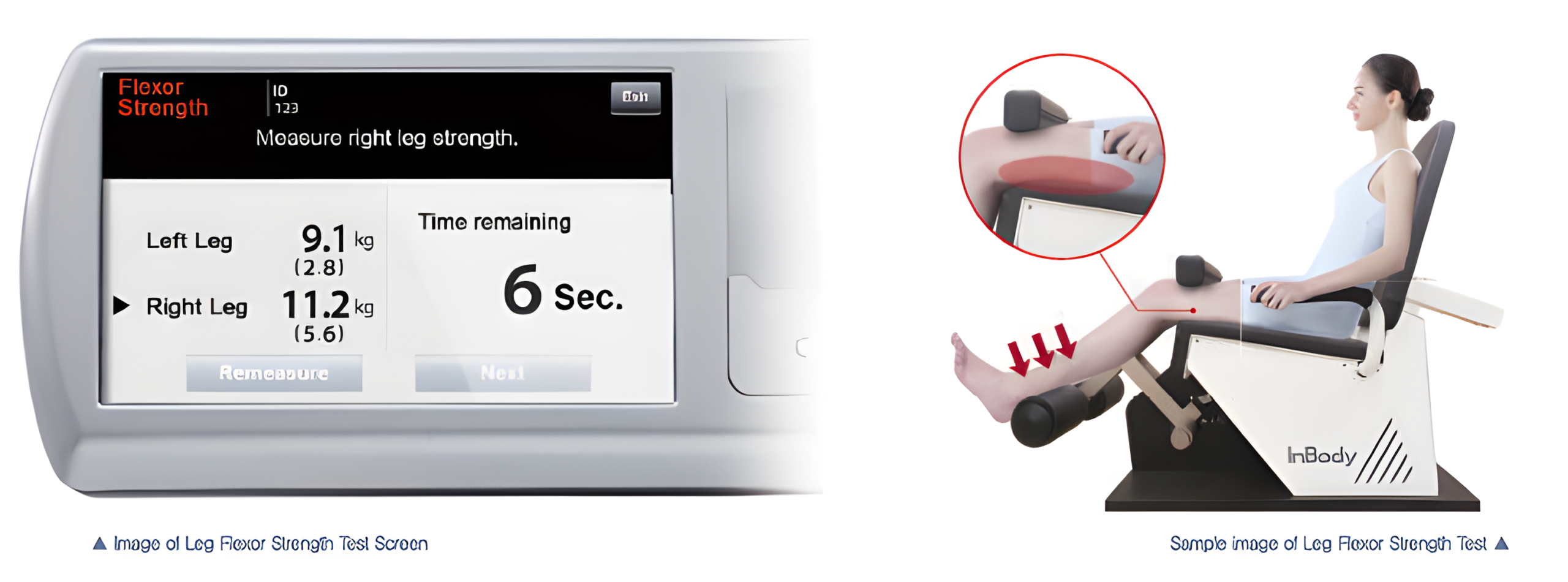
Leg Flexor Strength Test
Measures the muscle strength of the hamstring at the back of the thigh — the muscle group used to bend the knee.
Test angle fixed at 30°, measured left and right individually.
Functions
What the isometric method actually gives you back, category by category.
Absolute Muscle Strength
Uses an isometric method to minimize injury risk during measurement.
Measures Leg Extensor Strength and Leg Flexor Strength.
Extensor strength measured at 60° angle, flexor strength at 30° angle
Muscle Endurance
Endurance ratio calculated through measurement‑time analysis.
Provides data on muscle endurance against a normal range (over 50%).
Muscle Strength Balance
Measures left and right legs separately to flag clinical differences.
Checks the H/Q ratio between quadriceps and hamstring.
Used as an indicator for possible knee/leg injury and recovery through muscle balance.
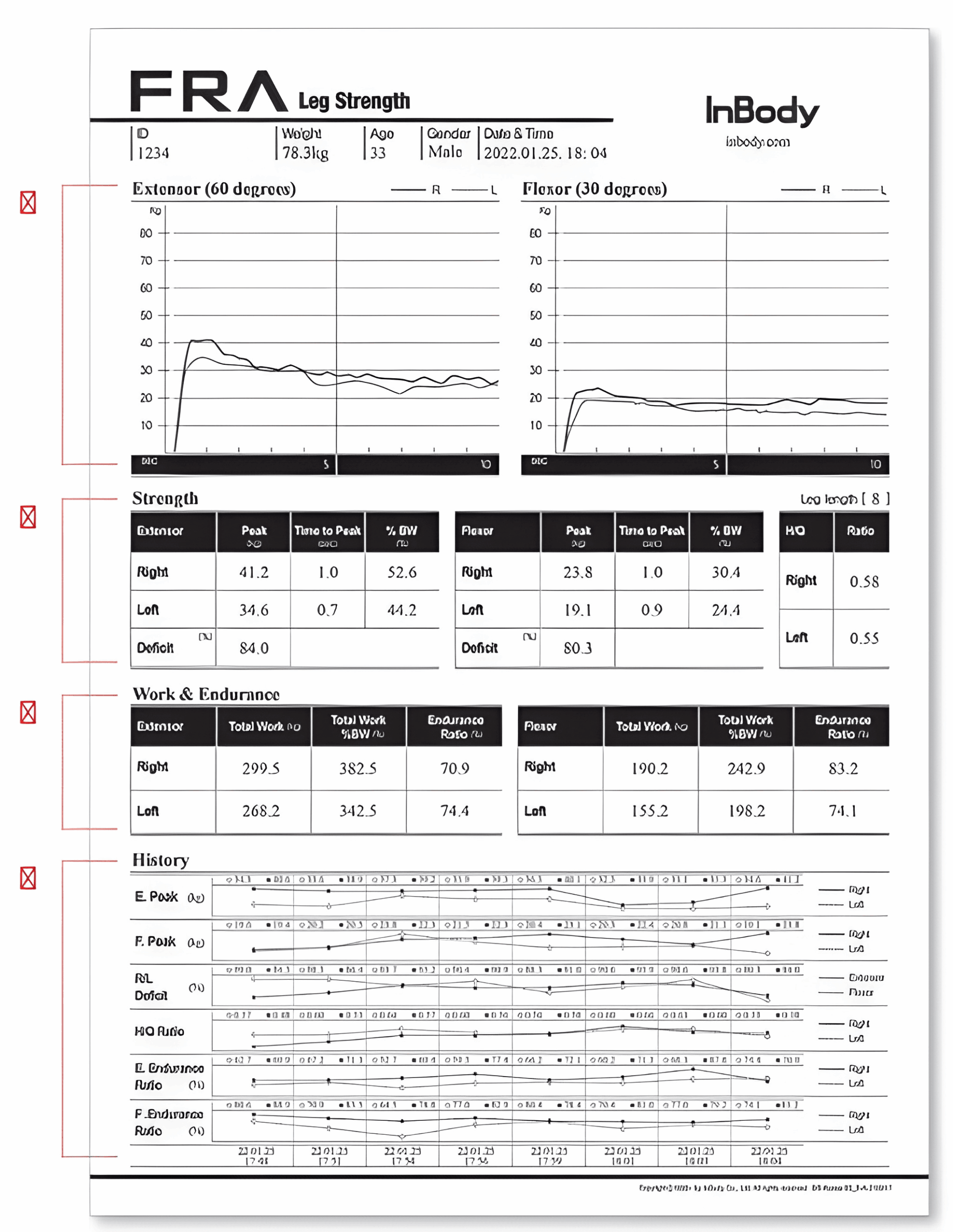
A result sheet built for follow‑up
Every test produces a printable result sheet — clear enough to hand to a client, detailed enough for clinical tracking.
Isometric Test Graph
Plots leg extensor and leg flexor strength over the test window, left vs. right.
Strength
Peak force, left/right ratio, time to peak, %BW (strength relative to body weight), and H/Q ratio.
Work & Endurance
Total work done and endurance ratio, tracked for both extensor and flexor.
History
Trends peak strength, right/left deficit, H/Q ratio, and endurance ratio across sessions over time.
Exercise Mode
Proceeds with isometric exercise, repeating muscle contraction and relaxation within the range of the exercise goal (±10–30%).
Total exercise time is made up of exercise time and rest time. The amount of time spent within the target range during the session is shown as the Settling Rate — an indicator of how effective the exercise was.
Low‑risk strength maintenance
Isometric exercise carries minimal injury risk while maintaining muscle strength.
Contracting at 20–30% of max strength for just 2–3 seconds a day has been shown to be effective.
Backed by age‑group research
A 26‑person study across age groups (20s–30s vs. 40s–50s) found no meaningful difference in blood pressure or heart rate response.
Muscle strength maintenance held consistent across age groups.
Joint‑friendly, fast to apply
Targets muscle only — no joint movement required.
Easy to apply and places greater stress on the muscle than isotonic exercise, building strength quickly.
Leg Strength Analyzer (IB‑LS) Specifications
Measurement Method
Force applied to the leg rest, measured by a load cell.
Result Items
Left Leg Extensor Strength, Right Leg Extensor Strength,
Left Leg Flexor Strength, Right Leg Flexor Strength.
Adapter
Power Input: AC 100–240V, 50–60Hz, 1.2A ·
Power Output: DC 12V, 3.4A.
Display Screen
7-inch TFT color LCD.
Input Interface
Touch screen.
External Interfaces
RS-232C ×1, USB 2.0 Host ×1, USB 2.0 Slave ×1, LAN ×1.
Device Size
IB-LS: 610(W) × 1,370(L) × 1,065(H) mm
Terminal: 440(W) × 440(L) × 990(H) mm.
Device Weight
IB-LS: 108 kg
Terminal: 8.5 kg.
Operating Environment
Temperature 10–40°C, Humidity 30–75%,
Atmospheric pressure 70–106kPa.
Transportation & Storage
Temperature −10–70°C, Humidity 10–80%,
Atmospheric pressure 50–106kPa (no condensation).